
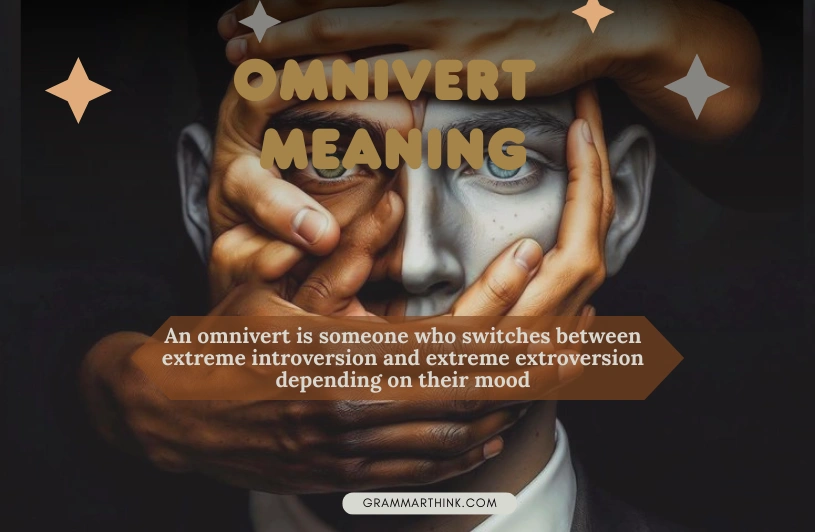
An omnivert is someone whose personality shifts fluidly between introversion and extroversion based on their environment, mood, energy levels, and social context. Unlike ambiverts who maintain a balanced middle ground, omniverts meaning describes people who experience dramatic swings being fully introverted one moment and completely extroverted the next.
Quick Stats: Omnivert
| Aspect | Details |
|---|---|
| Term Origin | Latin “omni” (all) + “vert” (turn) |
| First Documented Use | Early 2010s in psychology blogs |
| Estimated Prevalence | 15-20% of population (self-identified) |
| Key Trait | Extreme adaptability between social extremes |
| Common Confusion | Often mistaken for ambivert |
| Energy Pattern | Oscillating, context-dependent |
| Social Preference | Changes based on situation, not fixed |
Disclaimer: This article provides information about personality variation, not medical or mental health advice. If you’re concerned about your mental health, consult a licensed professional.
What Exactly Is an Omnivert?
Picture this: Last Friday, Sarah threw a massive party at her place. She was the life of the event dancing, cracking jokes, introducing strangers to each other. Everyone left thinking she was the biggest extrovert they’d ever met. Fast forward to Saturday morning, and Sarah canceled all her weekend plans. She spent two days alone, reading books, ignoring texts, and feeling completely recharged by her own company.
That’s the omnivert meaning in action.
The omnivert definition describes someone who doesn’t just balance introversion and extroversion they fully inhabit both ends of the spectrum at different times. While psychologists continue debating whether this constitutes a distinct personality category, millions of people recognize this pattern in themselves.
The omnivert personality operates like a personality chameleon, but here’s the catch: it’s not fake or performative. These shifts feel completely natural and authentic to the person experiencing them.
A Grammatical Overview: Omnivert Meaning
Breaking down what is an omnivert starts with understanding the word structure:
Omni- (prefix): From Latin, meaning “all” or “every” -vert (suffix): From Latin “vertere,” meaning “to turn”
Combined, it literally translates to “turns in all directions” or “encompasses all types.” This linguistic construction mirrors similar personality terms:
- Introvert (turns inward)
- Extravert (turns outward)
- Ambivert (both directions)
- Omnivert (all directions)
The term isn’t found in clinical psychology textbooks yet, but it’s gained massive traction in self-help communities, social media psychology content, and personality discussions since around 2013.
Origin & Etymology
Unlike introvert and extrovert terms coined by psychologist Carl Jung in the 1920s the omnivert personality label emerged organically from internet culture.
Timeline:
- 2011-2013: Early mentions appear on personality forums and Tumblr
- 2015-2017: Psychology bloggers start distinguishing omniverts from ambiverts
- 2018-2020: The term goes mainstream through social media personality quizzes
- 2021-Present: Mental health professionals begin acknowledging the pattern, though not as an official diagnostic category
The word filled a gap. People who experienced dramatic swings between social butterfly and hermit modes didn’t feel accurately described by existing terms. They weren’t consistently balanced (ambivert) but rather experienced authentic extremes.
Omnivert vs Ambivert
Here’s where confusion runs rampant. Many people use omnivert vs ambivert interchangeably, but they describe fundamentally different experiences.
| Feature | Omnivert | Ambivert |
|---|---|---|
| Social Pattern | Extreme swings between intro/extro | Consistent middle ground |
| Energy Source | Alternates dramatically | Balanced from both sources |
| Social Behavior | All-in or all-out | Moderate in most situations |
| Predictability | Less predictable, context-driven | More stable and consistent |
| Intensity | Experiences full spectrum | Experiences moderate levels |
| Frequency of Change | Can shift daily or hourly | Generally stable disposition |
Real-world example:
An ambivert at a party might enjoy conversation for a couple of hours, then politely excuse themselves when they’ve had enough. They’re never the loudest person but never the quietest either.
An omnivert at the same party might either be organizing drinking games and giving toasts OR sitting in the corner checking their phone and counting down minutes until they can leave. There’s no middle setting just one extreme or the other depending on their current state.
Different Contexts: How Omniverts Show Up in Various Situations
The omnivert meaning becomes clearer when you examine how these people navigate different life areas:
At Work: One week, they’re volunteering to lead the team presentation and organizing happy hours. The next week, they’re requesting to work from home and declining all video calls. Both versions are equally genuine.
In Relationships: They genuinely crave deep connection and constant communication some days. Other days, they need space that has nothing to do with their feelings about their partner. This can confuse partners who interpret the withdrawal as relationship trouble.
During Social Events: The same person who organized the group vacation might spend the entire trip in their hotel room. They weren’t faking enthusiasm during planning their energy just shifted.
In Creative Work: Many omniverts report their most productive creative periods happen during introverted phases, while their best networking and collaboration occur during extroverted swings.
Omnivert Definition: What Makes Someone an Omnivert?
The comprehensive omnivert definition includes these core characteristics:
1. Situational Extremes Not just “I can be social or quiet” but experiencing full-blown personality shifts. When they’re extroverted, they’re VERY extroverted. When they’re introverted, social interaction feels genuinely exhausting.
2. Authenticity Across States Neither mode feels forced or fake. Both versions represent their true self at that moment.
3. Unpredictable Triggers The switch might be triggered by:
- Energy levels (physical or emotional)
- Specific people or group dynamics
- Recent social saturation or deprivation
- Stress levels
- Even seemingly random factors like weather or what they ate
4. No Control Switch Most omniverts can’t just decide to be extroverted when they’re in an introverted phase. The state happens TO them rather than being consciously chosen.
5. Social Flexibility Despite the unpredictability, omniverts often become skilled at adapting their external behavior when necessary, even if it drains them.
Synonyms & Antonyms: Related and Opposite Concepts
Synonyms (or closely related terms):
- Adaptive personality
- Flexible social disposition
- Mood-dependent socializer
- Context-sensitive personality
Antonyms (or contrasting concepts):
- Fixed introvert
- Consistent extrovert
- Socially rigid personality
- Predictable social pattern
Note: True synonyms barely exist because omnivert fills such a specific niche. Most related terms don’t capture the extreme oscillation that defines the experience.
Example Sentences: Omnivert in Action
- “After realizing she was an omnivert, Maya stopped feeling guilty about canceling plans she understood her social energy wasn’t constant.”
- “The omnivert meaning perfectly described Jake’s personality: some weekends he hosted huge parties, other weekends he ignored everyone.”
- “Understanding what is an omnivert helped their relationship because her partner stopped taking the quiet phases personally.”
- “His omnivert personality made job hunting tricky he thrived in collaborative environments some days but needed complete isolation on others.”
- “The difference in omnivert vs ambivert clicked when she realized ambiverts stay balanced while she swung wildly between extremes.”
- “Recognizing her omnivert tendencies, she scheduled both social events and solo recovery time into her calendar.”
Signs You Might Be an Omnivert: Self-Recognition Patterns
You relate to these experiences:
- Friends have completely different perceptions of your personality depending on when they met you
- You genuinely love parties AND genuinely need days of total solitude
- Your ideal weekend could be either backpacking with friends or reading alone no preference
- You’ve taken personality tests multiple times and gotten different results
- People are shocked when they see your “other side”
- You’ve been called a social chameleon, but it doesn’t feel like acting
- Your energy needs feel unpredictable even to you
- You’ve wondered if you have multiple personalities (you don’t this is normal variation)
Omnivert Challenges: The Struggles Nobody Talks About
Relationship Confusion: Partners might interpret your introverted phases as rejection or lost interest. Friends might feel hurt when you cancel plans, not understanding you genuinely wanted to go when you made them.
Professional Misunderstandings: Colleagues might think you’re inconsistent or unreliable when your collaboration style shifts. Performance reviews can be confusing when different supervisors have experienced different versions of you.
Self-Doubt: Many omniverts report feeling “fake” or questioning their authenticity because their behavior varies so dramatically. This is compounded by personality culture that insists you should “know yourself” and behave consistently.
Planning Difficulties: How do you commit to future social events when you can’t predict what state you’ll be in? Many omniverts struggle with either over-committing (during extroverted phases) or under-committing (during introverted phases).
Energy Management: Without understanding your pattern, you might push yourself to socialize when you desperately need solitude, or isolate yourself when connection would actually feel good.
Read Also: Philophobic Meaning
Practical Strategies: Thriving as an Omnivert
1. Track Your Patterns Keep a simple log of your social energy levels. You might discover patterns you hadn’t noticed like introverted phases following stressful work weeks or extroverted surges after creative accomplishments.
2. Communicate Proactively Tell close friends and partners: “I have phases where I need more space, and it has nothing to do with my feelings about you.” This prevents misunderstandings.
3. Build Flexibility Into Commitments When making plans, acknowledge your nature: “I’d love to come, but can I confirm the day before? I’m working on honoring my energy levels.”
4. Create Escape Routes At social events, give yourself permission to leave early if you hit your limit. Drive separately. Position yourself near exits. These small adjustments reduce anxiety.
5. Schedule Recovery Time If you know you have a big social event, block out recovery time afterward. Protect it like any other important commitment.
6. Stop Apologizing Your personality isn’t a flaw requiring constant apologies. You’re not “moody” or “unpredictable” you’re an omnivert navigating natural variation.
Pros and Cons: Omnivert Meaning
| Advantages | Disadvantages |
|---|---|
| Extreme adaptability to different social contexts | Difficulty maintaining consistent relationships |
| Rich, varied life experience | Others might perceive you as unreliable |
| Deep understanding of both introverts and extroverts | Energy management requires constant attention |
| Ability to recharge through multiple methods | Professional environments often reward consistency |
| Never permanently trapped in one social mode | Self-identity can feel confusing |
| Strong empathy for different personality types | Planning future commitments feels risky |
Common Misconceptions: Omnivert Meaning
Misconception #1: Omniverts are just ambiverts who haven’t figured themselves out yet. False. The omnivert vs ambivert distinction matters. Ambiverts experience consistent balance; omniverts experience oscillation.
Misconception #2: Being omnivert means you’re two-faced or fake. Absolutely not. Both states represent genuine aspects of your personality. Authenticity doesn’t require consistency.
Misconception #3: Omniverts can “turn on” extroversion whenever needed. Many omniverts can perform extroversion when necessary, but it’s draining when they’re in an introverted phase. They can’t genuinely flip a switch.
Misconception #4: It’s the same as being moody or having mood swings. Mood disorders involve changes in emotional state. The omnivert personality involves changes in social energy and preference, not necessarily mood.
Misconception #5: Everyone is basically an omnivert. While everyone has some variation, true omniverts experience notably more dramatic and frequent shifts than the general population.
The Bottom Line: Embracing Your Omnivert Nature
Understanding the omnivert meaning isn’t about putting yourself in another box it’s about recognizing a pattern that helps you live more authentically.
You’re not broken for needing parties one weekend and solitude the next. You’re not inconsistent for thriving in group projects sometimes and preferring solo work other times. You’re an omnivert navigating the full spectrum of human social experience.
The omnivert personality gives you access to diverse experiences that more rigid personality types miss. Your challenge is learning to honor your current state rather than forcing yourself into a socially acceptable consistent mold.
Stop trying to “fix” your variability. Start building a life that accommodates it.
Conclusion
The omnivert definition describes people who swing between genuine introversion and authentic extroversion based on context, energy, and environmental factors. Unlike ambiverts who maintain balance, omniverts experience extremes.
Remember these core points:
- Omnivert vs ambivert isn’t just semantics the patterns differ significantly
- Your shifts are normal personality variation, not character flaws
- Both your introverted and extroverted states are authentically you
- Understanding what is an omnivert helps you stop fighting your nature
- Practical strategies exist for managing the challenges
Whether you’re an omnivert yourself or trying to understand one, the path forward involves acceptance, communication, and flexibility. Your personality doesn’t need to be consistent to be genuine.
? FAQs
Q1: Is omnivert a real personality type recognized by psychology?
Not officially. While psychologists recognize personality flexibility and variation, “omnivert” isn’t a formal diagnostic category. However, the pattern it describes is real and researched under different names.
Q2: How do I know if I’m an omnivert or just an extrovert who needs alone time?
Extroverts recharge through social interaction but need occasional breaks. Omniverts fully shift into introverted mode where social interaction actively drains them. If you experience complete state changes rather than just needing breaks, you might be omnivert.
Q3: Can omniverts control when they’re introverted versus extroverted?
Generally no. Most omniverts can’t consciously flip between states, though they can perform behaviors that don’t match their current state (at an energy cost). The shifts happen based on internal and external factors outside conscious control.
Q4: Are omniverts more common than we think?
Possibly. Many people who identify as ambiverts might actually be omniverts once they understand the distinction. Self-identification rates suggest 15-20% of people recognize omnivert patterns in themselves.
Q5: Does being omnivert make relationships harder?
It can create challenges, especially if partners interpret withdrawal as rejection. However, clear communication about your patterns and needs can actually strengthen relationships by preventing misunderstandings.
Q6: Can you develop into an omnivert, or are you born this way?
Personality research suggests both nature and nurture play roles. Some people may have natural predispositions toward flexibility, while life experiences might enhance or suppress these tendencies.
