
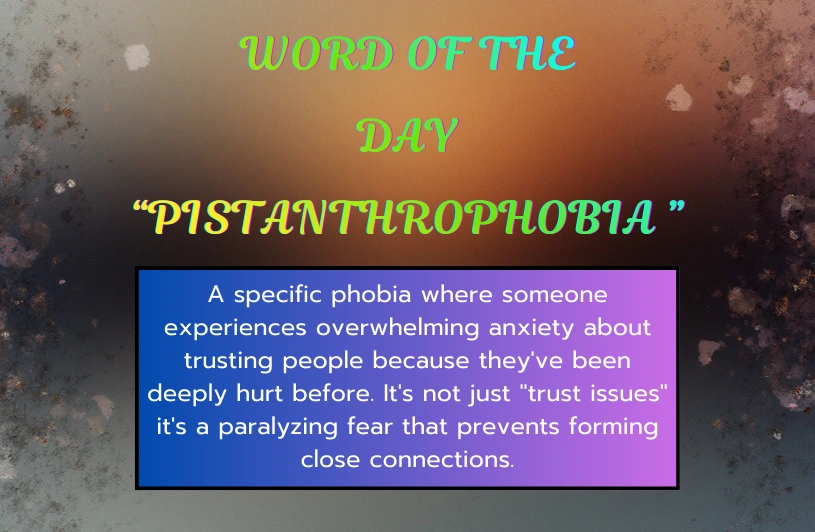
Have you ever felt your heart sink at the thought of trusting someone again after a painful betrayal? That’s not just being cautious it might be pistanthrophobia meaning the fear of trusting others due to past emotional wounds.
Last Updated: January 20, 2026
Quick Stats: Understanding Pistanthrophobia
| Aspect | Details |
|---|---|
| Type | Specific phobia (interpersonal) |
| Origin | Greek: “pistis” (trust) + “anthropos” (human) + “phobos” (fear) |
| Prevalence | Affects millions globally, though exact statistics vary |
| Common Age of Onset | Late teens to early adulthood |
| Gender Distribution | Affects all genders equally |
| Related Conditions | Anxiety disorders, PTSD, attachment issues |
| Treatment Success Rate | 70-90% with proper therapy |
| Primary Trigger | Past betrayal, emotional trauma, broken trust |
Disclaimer
This article focuses on linguistic concepts for educational and entertainment purposes only. Examples are culturally neutral and not intended to offend.
What Is Pistanthrophobia? Breaking Down the Definition
Let me paint you a picture. Sarah, a 28-year-old graphic designer, hasn’t dated in three years. Not because she doesn’t want to but because every time someone shows interest, her chest tightens, her palms sweat, and her brain screams “RUN!” That’s pistanthrophobia meaning an overwhelming fear of trusting people, especially in relationships.
The pistanthrophobia definition describes it as a specific phobia where individuals experience intense anxiety about trusting others due to previous negative experiences. Think of it as your emotional immune system going into overdrive trying to protect you from potential hurt by keeping everyone at arm’s length.
Unlike general trust issues, pistanthrophobia is more severe. It’s not just “I’ll take things slow.” It’s “I physically cannot allow myself to be vulnerable, even when I desperately want to.”
The Science Behind the Fear
Here’s where it gets interesting. When you’ve been deeply hurt whether by a cheating partner, a backstabbing friend, or a family betrayal your brain literally rewires itself. The amygdala (your brain’s alarm system) becomes hypersensitive. It starts treating trust like touching a hot stove: “Nope, we did that once, and it burned. Never again!”
Pistanthrophobia isn’t weakness or overthinking. It’s your brain trying to protect you based on past data. The problem? It’s protecting you so well that it’s preventing you from forming meaningful connections.
Common Pistanthrophobia Symptoms You Shouldn’t Ignore
Wondering if you or someone you know might be experiencing pistanthrophobia? Here are the telltale signs:
Emotional Symptoms
- Intense anxiety when someone tries to get close
- Constant fear of betrayal or abandonment
- Overwhelming urge to sabotage relationships before getting hurt
- Persistent feelings of vulnerability
- Emotional numbness or detachment
Physical Symptoms
- Rapid heartbeat when discussing feelings
- Sweating or trembling in intimate conversations
- Nausea or stomach discomfort
- Difficulty breathing during vulnerable moments
- Tension headaches or muscle tightness
Behavioral Symptoms
- Avoiding deep conversations or emotional intimacy
- Creating distance in relationships that feel “too close”
- Constant need for reassurance
- Testing people repeatedly to “prove” they’ll betray you
- Withdrawing completely from social situations
Pistanthrophobia Meaning in Different Languages
Understanding pistanthrophobia crosses cultural boundaries. Here’s how different communities describe this fear:
Pistanthrophobia in Hindi: विश्वास न कर पाने का डर (vishwas na kar paane ka dar) – The fear of being unable to trust
Pistanthrophobia meaning in Telugu: నమ్మకం పెట్టడానికి భయం (nammakam pettadaniki bhayam) – Fear of placing trust
Pistanthrophobia meaning in Tamil: நம்பிக்கை வைக்க பயம் (nambikkai vaikka payam) – Fear of placing faith
Pistanthrophobia meaning in Urdu: بھروسہ کرنے کا خوف (bharosa karne ka khauf) – Fear of trusting
Pistanthrophobia meaning in Marathi: विश्वास ठेवण्याची भीती (vishwas thevnyachi bheeti) – Fear of keeping trust
The universality of these translations proves one thing: this fear transcends borders and affects people worldwide.
How to Pronounce Pistanthrophobia (How to Say It)
Let’s tackle pistanthrophobia how to say it correctly:
Pronunciation: pis-tan-thro-PHO-bia
Break it down:
- Pis (like “piss”)
- tan (like “tan” from the sun)
- thro (like “throw” without the “w”)
- PHO (emphasized, like “foe”)
- bia (like “bee-uh”)
Don’t worry if you stumble over it even therapists sometimes need a practice round!
Real Stories: What a Pistanthrophobia Person Experiences Daily
Meet Marcus. After his fiancée cheated on him two weeks before their wedding, he became what we’d call a pistanthrophobia person. Five years later, he still:
- Checks his girlfriend’s phone (with permission) constantly
- Assumes every late text means betrayal
- Creates arguments to test if she’ll leave
- Feels physical panic when she mentions male coworkers
- Self-sabotages by pulling away when things get “too good”
Marcus isn’t controlling or paranoid by nature. His pistanthrophobia hijacked his ability to trust, turning every relationship into a potential crime scene where he’s searching for evidence of betrayal.
Pistanthrophobia Test: Do You Have It?
While there’s no official pistanthrophobia test, mental health professionals use these assessment questions:
Self-Assessment Questions
- Do you avoid relationships because you fear being hurt again? (0-10 scale)
- Does the thought of trusting someone new trigger physical anxiety?
- Have past betrayals significantly impacted your current relationships?
- Do you constantly look for “red flags” even in healthy relationships?
- Have you ended relationships preemptively to avoid potential pain?
- Do you feel physically ill when someone asks you to be vulnerable?
- Is your fear of trust interfering with your daily life and happiness?
Scoring Guide:
- 0-20: Normal caution
- 21-40: Elevated trust issues
- 41-60: Possible pistanthrophobia consider professional help
- 61-70: Severe symptoms therapy strongly recommended
Pistanthrophobia Treatment: The Path to Healing
Here’s the good news: pistanthrophobia treatment works! You’re not broken beyond repair.
Evidence-Based Treatment Options
1. Cognitive Behavioral Therapy (CBT) CBT helps you identify and challenge those catastrophic thoughts. Instead of “Everyone will betray me,” you learn to think “Some people hurt me, but not everyone will.”
2. Exposure Therapy Gradual exposure to trust-building situations in safe, controlled environments. Think of it as emotional weight training you start light and build up.
3. EMDR (Eye Movement Desensitization and Reprocessing) Particularly effective if your pistanthrophobia stems from trauma. EMDR helps reprocess painful memories so they lose their emotional charge.
4. Attachment-Based Therapy Focuses on healing early attachment wounds that might contribute to your fear of trust.
5. Medication (When Necessary) For severe anxiety symptoms, doctors might prescribe anti-anxiety medication or SSRIs temporarily while you work through therapy.
Self-Help Strategies
| Strategy | How It Helps | Time Commitment |
|---|---|---|
| Journaling | Process emotions and identify patterns | 15-20 minutes daily |
| Mindfulness meditation | Reduce anxiety and stay present | 10-15 minutes daily |
| Support groups | Connect with others facing similar challenges | 1-2 hours weekly |
| Self-compassion exercises | Reduce self-blame and shame | 10 minutes daily |
| Gradual trust-building | Take small risks in safe relationships | Ongoing |
The Difference: Trust Issues vs. Pistanthrophobia
Let’s clear up the confusion:
| Trust Issues | Pistanthrophobia |
|---|---|
| Cautious but manageable | Paralyzing fear |
| Can trust with effort | Physical/emotional inability to trust |
| Doesn’t impact daily functioning | Severely limits relationships and happiness |
| Responds to reassurance | Needs professional intervention |
| Situational skepticism | Generalized, intense phobia |
Understanding pistanthrophobia definition means recognizing it’s not just “trust issues on steroids” it’s a legitimate psychological condition requiring proper treatment.
Why Pistanthrophobia Develops: Root Causes
Pistanthrophobia meaning extends beyond just one bad breakup. Common causes include:
- Repeated betrayals in childhood or formative years
- Significant romantic betrayal (infidelity, abandonment)
- Friendship betrayals during vulnerable times
- Parental abandonment or inconsistency
- Emotional or physical abuse by trusted individuals
- Witnessing betrayal in close relationships (like parents)
- Cultural or societal trauma affecting trust in institutions
Living With Pistanthrophobia: Coping Mechanisms
If you’re a pistanthrophobia person, here are daily strategies:
Morning routine: Start with affirmations like “I am safe. Not everyone is my past.”
Communication: Tell trusted people “I’m working on trust issues. Please be patient with me.”
Boundaries: It’s okay to take relationships slow. Speed doesn’t equal success.
Reality checks: When anxiety strikes, ask “Is this fear based on this person or my past?”
Self-care: Anxiety depletes you. Prioritize sleep, nutrition, and activities that ground you.
When to Seek Professional Help
You should consider pistanthrophobia treatment if:
- Your fear prevents you from forming any close relationships
- You’ve ended multiple healthy relationships due to fear
- Physical symptoms interfere with daily life
- You feel depressed or isolated due to your inability to trust
- Self-help strategies haven’t helped after 3-6 months
Hope for Recovery: Success Stories
Remember Sarah from earlier? After 18 months of therapy, she’s now engaged. Marcus? He’s celebrating two years in his healthiest relationship ever. Pistanthrophobia isn’t a life sentence it’s a chapter you can close.
The pistanthrophobia definition might describe your current reality, but it doesn’t have to define your future.
Conclusion: Your Trust Journey Starts Here
Understanding pistanthrophobia meaning is the first step toward healing. This fear of trusting others while overwhelming is treatable. Whether you recognize the pistanthrophobia symptoms in yourself or someone you love, remember: healing is possible, help is available, and you deserve relationships built on genuine connection rather than fear.
Your past taught you to protect yourself. Now it’s time to teach yourself that not everyone deserves that wall you’ve built. Therapy, patience, and self-compassion can help you rewrite your story one where pistanthrophobia becomes something you overcame, not something that defines you.
? Frequently Asked Questions
1. What exactly is pistanthrophobia meaning in simple terms?
Pistanthrophobia meaning refers to the intense fear of trusting people, typically stemming from past betrayals or emotional trauma. It’s more severe than general trust issues and often requires professional treatment to overcome.
2. How do I know if I have pistanthrophobia or just normal trust issues?
If your fear of trust causes physical symptoms (like panic attacks), prevents you from forming any close relationships, or significantly impacts your daily happiness, it might be pistanthrophobia. A pistanthrophobia test with a mental health professional can provide clarity.
3. Can pistanthrophobia be cured completely?
Yes! Pistanthrophobia treatment through therapy (especially CBT and EMDR) has high success rates. While you might always be cautious, you can absolutely learn to trust again and form healthy relationships.
4. What are the most common pistanthrophobia symptoms?
Common pistanthrophobia symptoms include intense anxiety when getting close to others, physical symptoms like rapid heartbeat and sweating, constant fear of betrayal, emotional numbness, and tendency to sabotage relationships before getting hurt.
5. Is pistanthrophobia the same in all cultures?
The core pistanthrophobia definition remains consistent across cultures, though expression may vary. Whether you search for pistanthrophobia in Hindi, pistanthrophobia meaning in Telugu, or any other language, the fundamental fear of trusting after betrayal transcends cultural boundaries.
6. How long does pistanthrophobia treatment typically take?
Pistanthrophobia treatment duration varies by individual, but most people see significant improvement within 6-18 months of consistent therapy. Severe cases might take longer, but progress is typically visible within the first few months.
Check out our previous blog here: [Spoonerism Definition]
